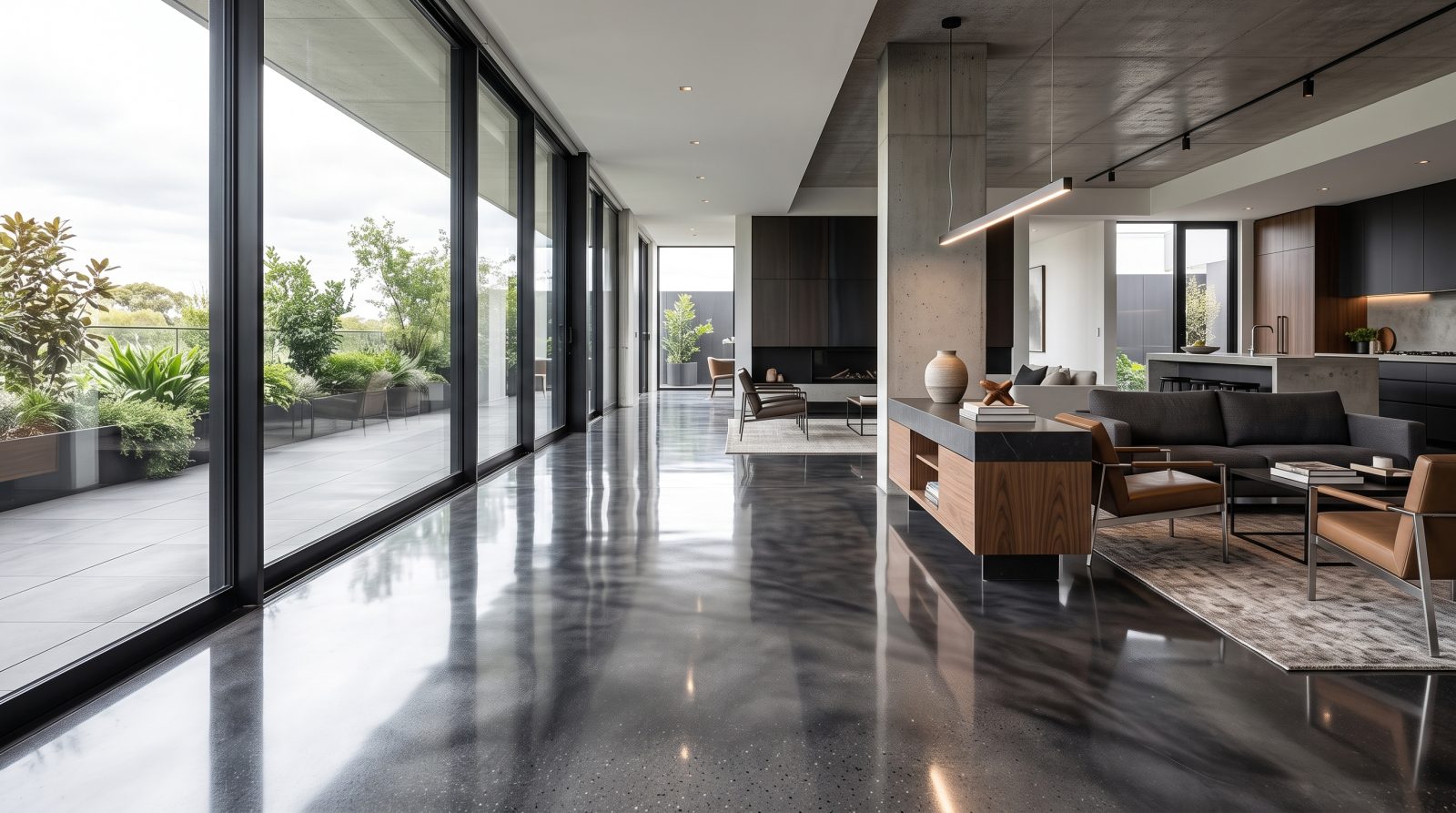
How does metallic epoxy create its 3D look?
Metallic epoxy is not a paint and not a single product you roll on. It is a system: a primer to bond to the concrete, a pigmented metallic epoxy coat, and a clear topcoat to protect it. The visual interest comes from the metallic coat. Fine metallic pigments are mixed into clear or tinted epoxy, then the wet coating is manipulated, with a roller, brush, squeegee, air from a leaf blower, or heat from a torch, so the pigments separate and drift. As the epoxy cures, that movement freezes in place, which is why every metallic floor is genuinely one of a kind.
Because the effect lives in a liquid layer, two installers using the same colors will never produce identical floors, and even you cannot perfectly repeat a sample. That is part of the appeal, but it is also why a sample board or a small test area matters so much: it shows the color family and the contrast level you will get, not an exact photocopy of the final result.
The depth you see, the sense of looking down into a pool or a slab of stone, comes from light passing through the clear resin and reflecting off pigments at slightly different levels. A glossy topcoat amplifies that depth; a satin or matte topcoat softens it. Understanding this layered structure helps you make realistic design choices: the color and pattern come from the metallic coat, while the shine and slip resistance come from the topcoat you choose on top.
What are the most popular metallic epoxy design styles?
Most metallic epoxy designs fall into a handful of recognizable styles, and naming the one you like makes it far easier to communicate with an installer. Here are the looks people most often ask for and what defines each.
- Single-tone pearl: one metallic color over a coordinating base, manipulated lightly for a soft, cloudy shimmer. The calmest, most neutral option, good for spaces where you want subtle movement rather than a statement.
- Marble veining: a light or dark base with thin contrasting veins pulled through it to mimic natural stone like Carrara or Calacatta marble. Reads upscale and timeless.
- Lava or molten metal: warm, high-contrast blends (copper, bronze, orange, deep brown) worked aggressively so the floor looks like flowing or cooling metal. Bold and dramatic.
- Ocean or water: blues, teals, and whites blended into rolling, wave-like patterns. A favorite for a relaxed, coastal feel.
- Galaxy or cosmic: a deep base (black, charcoal, midnight blue) with metallic accents and sometimes fine flake or glitter to suggest stars and nebulae. The most theatrical look.
- Industrial neutral: grays, silvers, pewter, and graphite kept low-contrast for a modern, understated concrete-with-depth appearance that hides dust and tire marks well.
Which metallic epoxy color combinations work best?
Color is the single biggest driver of how a metallic floor feels, and the best combinations usually pair a base tone with one or two accent pigments that either blend smoothly or contrast sharply. Below are reliable starting points, organized by the mood they create.
A practical tip on contrast: low-contrast blends (colors close together on the wheel, like silver with pewter) forgive imperfections and age gracefully, while high-contrast blends (like black with copper) show every swirl and demand a skilled hand. If this is your first metallic floor, a medium-contrast palette is the easiest to love long-term.
- Warm and rich: copper, bronze, and a touch of black for a molten, foundry-inspired look.
- Cool and modern: charcoal or graphite base with silver or pewter accents for a sleek, contemporary feel.
- Coastal and calm: teal and aqua with white pearl for a water-like, airy effect.
- Neutral and timeless: warm gray base with subtle gold or champagne pearl, flexible enough to match almost any decor.
- High drama: black base with metallic silver or blue veining for a galaxy or polished-stone effect.
- Earthy and organic: terracotta, sand, and bronze for a natural, grounded look that suits warm-toned spaces.
Glossy, satin, or matte: which finish should you choose?
The topcoat finish changes the personality of a metallic floor as much as the color does, and it is a separate decision from the metallic pattern beneath it. A high-gloss topcoat delivers the deepest, most reflective, showroom look and makes the 3D effect pop; the trade-off is that gloss shows dust, footprints, and fine scratches more readily and can be slick when wet. A satin finish keeps much of the depth while cutting glare and hiding everyday smudges, which is why many homeowners land here for living spaces and garages alike. A matte finish is the most understated, reading more like soft natural stone, and is the most forgiving of dust and minor wear.
Slip resistance is a finish-related choice worth raising with your installer up front. Smooth glossy epoxy can be slippery when wet, so for garages, entryways, patios, or any area that may see water, an anti-slip additive (a fine aggregate broadcast into the topcoat) can be added. It slightly reduces gloss and changes the texture underfoot, but it meaningfully improves traction, an honest trade-off rather than a free upgrade.
If you are undecided, ask whether your installer can show finish samples of the same color in gloss and satin side by side. The same metallic blend can look like two different floors depending on the topcoat, so seeing them together prevents surprises.
Where does each metallic design work best in a home?
Matching the design to the room, and to South Bay living, helps the floor look intentional rather than random. Garages are the most common metallic epoxy project here, and they suit bolder, higher-contrast looks (copper-and-black, charcoal-and-silver) that hide tire marks and the occasional drip while still looking like a finished space rather than a utility floor. Because much of the South Bay enjoys a mild, dry climate, garage floors here are often used as workshops, gyms, or hangout spaces, so a design you actually enjoy looking at pays off.
Interior living areas, basements, sunrooms, and open-plan spaces tend to look best with calmer palettes: neutral grays, soft pearls, or marble veining that complements furniture rather than competing with it. Coastal blues and aquas are a popular fit for South Bay homes closer to the water and work well in entryways, bonus rooms, and indoor-outdoor transition spaces. Commercial and retail spaces, by contrast, often want the drama, lava, galaxy, or bold marble, because the floor itself becomes part of the brand experience.
One South Bay-specific consideration is the concrete itself. Many local homes and garages sit on slab-on-grade foundations, and moisture moving up through a slab is the enemy of any epoxy bond. Coastal and low-lying areas, plus older slabs without a vapor barrier, are more prone to this. A reputable installer will test the slab for moisture and may recommend a moisture-mitigating primer before any metallic coat goes down; this is about durability, not upselling, and it protects the look you are paying for. To talk through which design suits your space and slab, give us a call.
What should you know before committing to a design?
Surface preparation is the foundation of every good metallic floor, and it is invisible in the final result, which is exactly why it gets shortchanged by cut-rate work. Proper prep means mechanically profiling the concrete (typically diamond grinding or shot blasting), repairing cracks and pits, and ensuring the slab is clean, dry, and within the right moisture range before any coating goes down. A beautiful metallic blend over poorly prepped concrete will peel, bubble, or delaminate regardless of how good the colors look on day one.
Cure and return-to-service times are worth planning around. As typical industry guidance (not a guarantee for your specific job), a metallic epoxy system is usually walk-on ready in roughly 24 hours after the topcoat, with light use after about 48 to 72 hours, and full chemical and vehicle-traffic readiness often around 5 to 7 days, depending on the product, coats, temperature, and humidity. Epoxy also prefers a moderate environment during application; very cold, very hot, or very humid conditions can affect cure and appearance, which is one reason scheduling and a controlled space matter.
Finally, set expectations on uniqueness and samples. Because the pattern is created by hand in a wet layer, ask to see physical samples or photos of the installer's actual past work in your chosen color family, and understand that your floor will be similar in style and contrast rather than an exact match to any single photo. Costs for metallic epoxy vary widely based on square footage, slab condition, number of colors, and prep required, and any figures you see online are typical industry ranges, not a quote. The only way to get a real price is an in-person look at your concrete. When you are ready to plan colors, finish, and a realistic timeline for your space, reach out for a consultation.