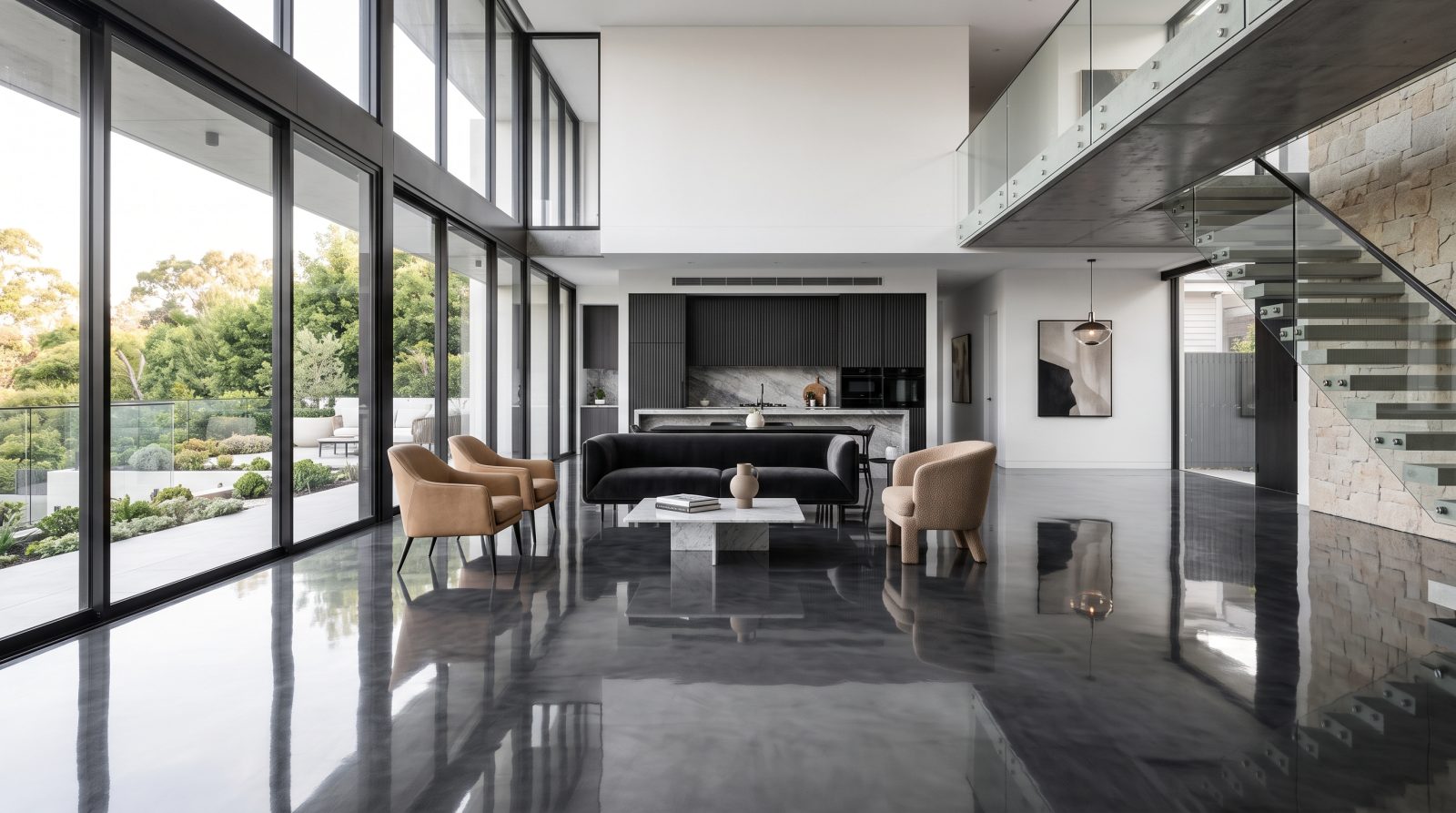
What does a garage floor coating cost per square foot?
Most professionally installed garage floor coatings fall between $3 and $12 per square foot installed, and that single figure is the most useful way to compare quotes. The wide range exists because "floor coating" covers very different products - from a single thin coat of water-based epoxy to a multi-layer polyaspartic system with a vinyl-flake broadcast and a UV-stable topcoat. Within that range, the price almost always tracks how many coats go down, how durable the chemistry is, and how much work the concrete needs before any product is applied.
To turn a per-square-foot range into a real budget, measure your garage. A standard two-car garage is commonly 20 ft by 20 ft (400 sq ft) up to about 22 ft by 24 ft (around 528 sq ft). Multiply your square footage by the per-foot range for the system you want, and you'll have a realistic planning number. Keep in mind that very small floors can carry a higher per-foot cost because there's a minimum amount of mobilization, prep, and material on every job regardless of size.
- Single-car garage (~250-300 sq ft): roughly $1,000-$3,000 for most mid-range systems, as an estimate
- Two-car garage (~400-500 sq ft): roughly $1,500-$5,000 for most mid-range systems
- Three-car garage (~600-800 sq ft): roughly $2,500-$8,000+ depending on system and prep
- Per-square-foot ranges are estimates; small floors often price higher per foot due to job minimums
What's actually included at each price tier?
Price tiers map closely to the coating system, so it helps to know what you're getting at each level rather than chasing the lowest number. A budget DIY-style roll-on epoxy is the thinnest and least durable option; a professional full-flake polyaspartic system is the thickest, most chip-resistant, and longest-lasting. The middle of the market - a professional epoxy base with a flake broadcast and a clear topcoat - is where most homeowners land for a balance of looks, durability, and cost.
When you compare bids, ask what's included so you're comparing the same thing: the number of coats, the mil thickness of the finished system, whether a topcoat is included, and whether concrete repair and proper prep are part of the price or billed separately. A cheaper quote that skips grinding and crack repair is rarely cheaper once the coating peels.
- DIY roll-on epoxy kit (~$2-$4/sq ft materials, your labor): thin single coat, short lifespan, no professional grinding
- Professional single-coat epoxy (~$3-$6/sq ft installed): better adhesion and prep, basic finish, limited UV/chemical resistance
- Epoxy base + vinyl flake + clear topcoat (~$5-$8/sq ft installed): the popular mid-range, attractive flake finish, solid durability
- Full polyaspartic / polyurea flake system (~$7-$12+/sq ft installed): fastest cure, strongest chip and UV resistance, longest-lasting
Why two garages the same size can cost very different amounts
The single biggest swing factor isn't the coating - it's the concrete underneath it. A clean, sound slab needs only standard prep, while a cracked, oil-stained, pitted, or previously coated floor needs repair and more aggressive surface profiling before anything can bond. That extra labor and material is real work, and it's the main reason two identical-size garages can quote hundreds or even a couple thousand dollars apart.
Surface preparation is the difference between a coating that lasts and one that lifts. Reputable installers mechanically profile the slab - usually by diamond grinding or, for heavier work, shot blasting - to open the concrete's pores so the coating can lock in. Skipping prep is the most common reason a coating fails early, which means a low bid that omits real grinding can cost you far more when it has to be redone.
- Concrete condition: cracks, spalling, pitting, and old failing coatings all add prep cost
- Prep method: diamond grinding is standard; shot blasting for tougher surfaces costs more
- Moisture: slabs with high moisture or vapor drive may need a moisture-mitigation primer, adding cost
- Oil and contamination: degreasing and patching oil-soaked concrete adds labor
- Extras: cove base at walls, custom flake blends, anti-slip additives, and color choices can raise the price
DIY epoxy kit vs. professional installation: the real trade-off
A big-box DIY epoxy kit can cover a two-car garage for materials in the low hundreds, which looks like a huge saving against a professional job. The honest trade-off is durability and prep. Most consumer kits are thin, water-based coatings applied over acid-etched concrete rather than mechanically ground concrete, and they're far more likely to peel, bubble, or wear through at the tires within a few years. You're trading upfront dollars for a shorter, less predictable lifespan.
Professional installation costs more because it includes mechanical grinding, crack and joint repair, higher-solids or polyaspartic chemistry, proper film thickness, and an installer who controls for temperature and humidity during cure. If you want a finish that holds up to hot tires, dropped tools, and chemicals for the long haul, a professional system is usually the better value per year of service - even though the sticker is higher on day one.
- DIY kit: lowest upfront cost, but thin film, etch-only prep, and a typically shorter lifespan
- Professional: higher upfront cost, but mechanical prep, thicker film, and a longer service life
- Hot-tire pickup (where soft thin coatings lift under warm tires) is far more common with DIY kits
- Think in cost-per-year, not just cost today, when comparing the two
Cure times, thickness, and other facts worth asking about
Beyond price, the technical details tell you what you're buying - and they're fair questions to ask any installer. Cure time is one of the most practical: a standard epoxy system generally needs about 24 hours before light foot traffic and roughly 72 hours (often a full 5-7 days) before you park a vehicle and apply full load. Polyaspartic systems cure much faster, sometimes allowing return to service in about 24 hours, which is part of why they cost more.
Film thickness and conditions matter too. A quality flake floor system typically builds to several tens of mils thick once base, flake, and topcoat are combined, versus a thin DIY coat that may be only a few mils. Most coatings also have an installation window for temperature and humidity - commonly around 50-90F with controlled humidity - because applying outside that range can cause poor adhesion, blushing, or bubbling. South Bay garages benefit from a mild, dry-summer climate, so temperature is rarely a problem here; the bigger thing to plan around is the damp, cooler mornings of a wet winter, when an installer may schedule the pour for later in the day to give the slab a clean cure.
- Epoxy cure: ~24 hrs to walk on, ~72 hrs to several days before parking and full load
- Polyaspartic cure: often back in service in about 24 hours, which raises material cost
- Thickness: pro flake systems build to several tens of mils; thin DIY coats may be only a few mils
- Conditions: most coatings install best around 50-90F with controlled humidity
- Always ask whether the quote includes prep, a topcoat, and concrete repair
How to budget and get an accurate number
Start with your square footage and the system you actually want, then apply the per-foot range above for a realistic planning budget. From there, the honest truth is that no online figure can replace an on-site look - your real price depends on the condition of your specific slab, which a contractor can only assess in person. Treat any number you get before that inspection, including the ranges on this page, as an estimate and not a quote.
When you collect bids, compare like for like: same square footage, same number of coats, same chemistry, prep and concrete repair included, and a clear note on whether a topcoat and any extras (flake density, anti-slip, cove base, color) are part of the price. A transparent installer will happily break this down. If you'd like us to measure your garage and explain exactly what your floor would need, call undefined and we'll give you a straight, no-pressure walkthrough.
- Measure your garage and multiply by the per-foot range for your chosen system
- Confirm prep and concrete repair are included, not added later
- Compare coats, mil thickness, topcoat, and the warranty terms each installer offers across bids
- Remember every range here is a labeled estimate - an on-site visit gives the real price